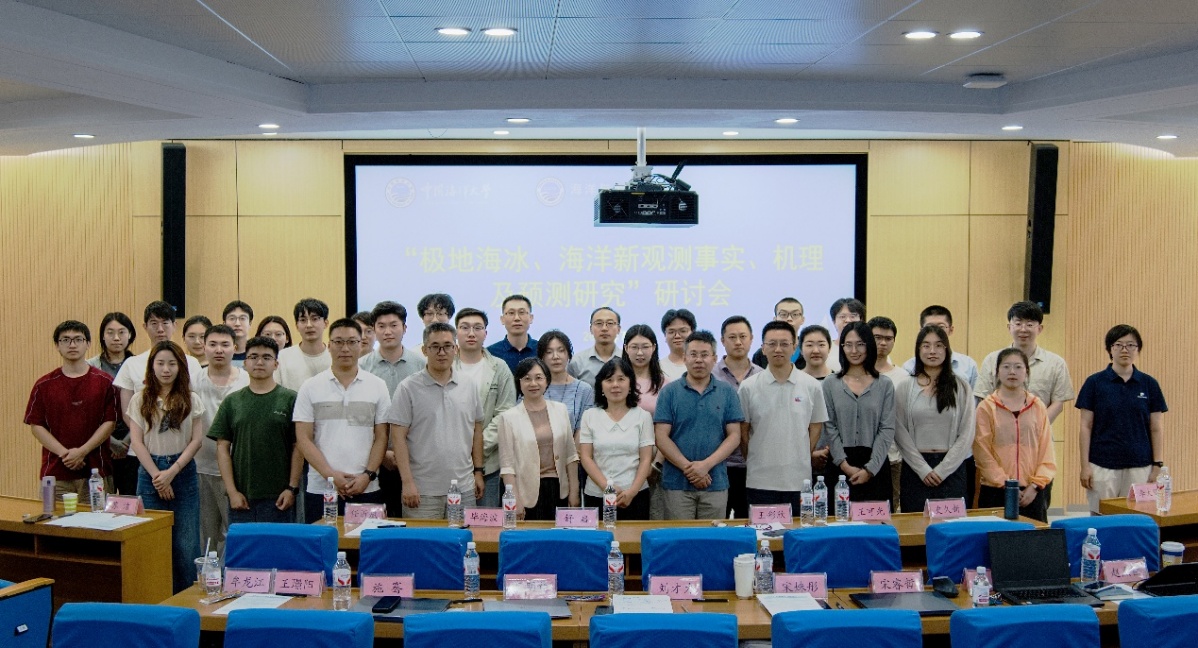
On July 7, 2026, the symposium on “New Observational Findings, Mechanisms, and Prediction of Polar Sea Ice and Oceans” was convened at the College of Oceanic and Atmospheric Sciences, Ocean University of China (OUC). The event was co-organized by the college and the Key Lab of Polar Oceanography and Global Ocean Change, taking advantage of a visit by experts from the Norwegian Meteorological Institute to establish a platform for frontier polar ocean research exchange among institutions in Qingdao.
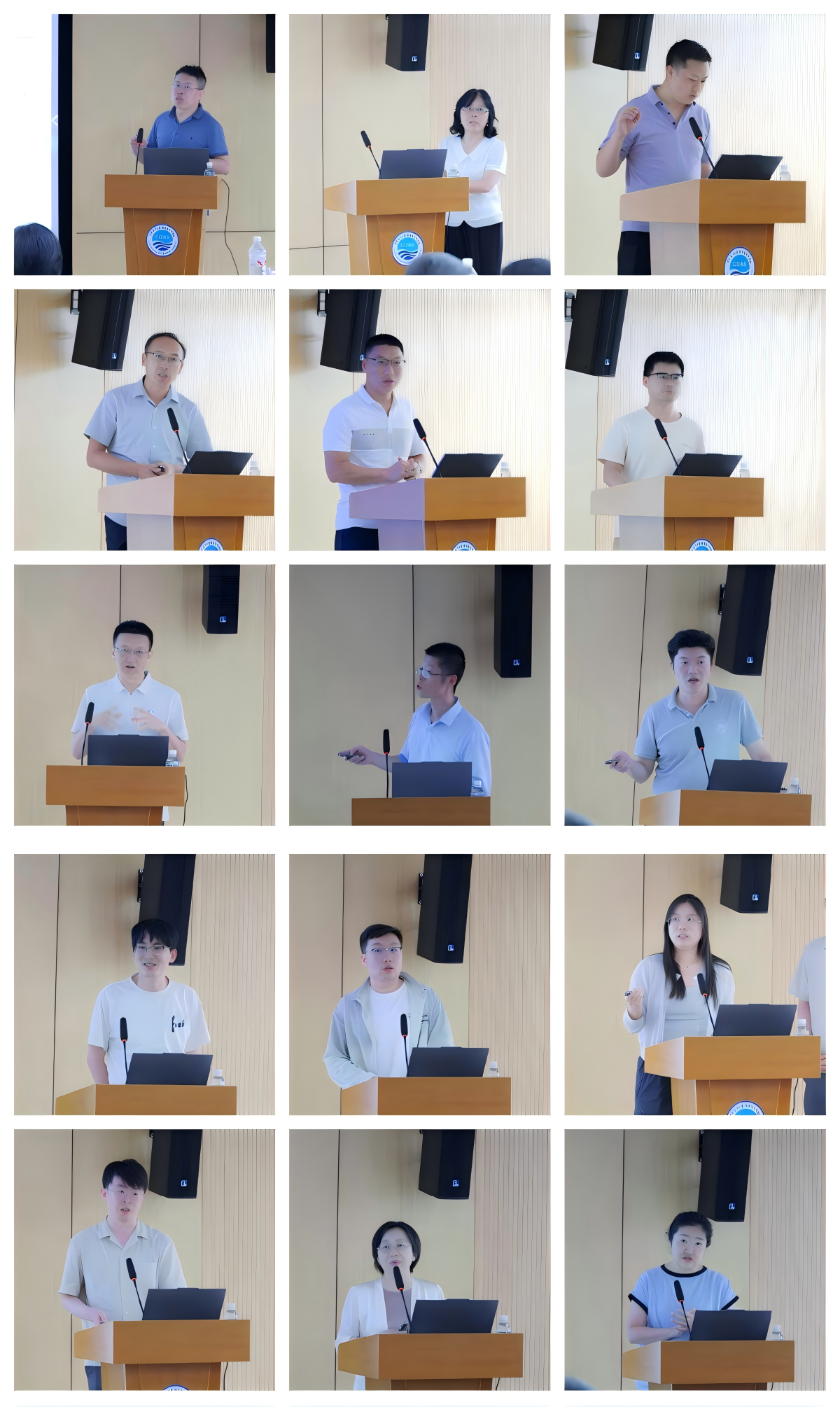
The symposium commenced with presentations by Dr. Wang Keguang and Dr. Wang Caixin from the Norwegian Meteorological Institute, who shared their recent findings on high-resolution coupled model data assimilation and sea surface temperature and wind validation in the Barents Sea region. Subsequently, researchers from OUC, the First Institute of Oceanography of the Ministry of Natural Resources, the Institute of Oceanology of the Chinese Academy of Sciences, the Laoshan Laboratory, and the Qingdao Joint Institute for Marine Meteorology delivered presentations covering a wide spectrum of topics. These included the driving mechanisms of Arctic sea ice change, shelf ice dynamics and Northeast Passage utilization, artificial intelligence-based sea ice prediction models, thermal effects of mesoscale eddies in the Southern Ocean, polar ice-ocean observation systems, environmental impacts of Antarctic icebergs, and Arctic sea fog and marine heatwaves. Each presentation was followed by in-depth discussion.
During the concluding panel session, Dr. Wang Keguang introduced recent European polar research initiatives, and participants engaged in intensive exchange on current research priorities, observational technology deficiencies, and optimization of predictive models in the polar sea ice and ocean domain. The symposium drew attendees ranging from senior researchers and professors to early-career postdoctoral fellows and graduate students. Overall, the event showcased the interim research progress of Qingdao’s polar science teams and laid a solid foundation for future cross-institutional collaborative research and innovation in polar observation and forecasting technologies.